
What Is the Life Expectancy of a Dog with IVDD?
Most dogs with IVDD can live a full, normal lifespan if the condition is managed well. Life expectancy depends on the stage of the disease, treatment choice, and quality of home care—not the diagnosis itself.
What is the life expectancy of a dog with IVDD?
Most dogs with IVDD can live a completely normal lifespan—as long as one that does not have the disease—provided the condition is managed well. IVDD can change a dog's life, but it doesn't have to shorten it. The key is early diagnosis, appropriate treatment, and consistent home care.
Life expectancy in dogs with IVDD depends on the stage of the disease at diagnosis and how aggressively it's treated. Dogs with mild signs (grades 1–2) often respond well to conservative management and live out their full years. Dogs with more severe signs (grades 3–5) may need surgery, but many recover and go on to live long, happy lives. A dog's age at diagnosis also matters—younger dogs tend to have better outcomes, but older dogs can still do well with proper care.
The prognosis is generally good: most dogs with IVDD can live a full life, especially when owners follow veterinary guidance closely. The disease itself doesn't shorten lifespan; complications like untreated paralysis or urinary infections can, but those are preventable with good care.
Life expectancy by IVDD stage: from mild to severe
IVDD is graded 1 to 5 based on neurological signs. The grade at diagnosis strongly influences treatment and long-term outlook, but even severe stages can have good outcomes with prompt care.
| Stage | Signs | Typical treatment | Life expectancy outlook |
|---|---|---|---|
| Grade 1 | Mild pain, no weakness | Conservative: rest, anti-inflammatories | Full normal lifespan |
| Grade 2 | Pain, mild weakness, wobbling | Conservative or surgery if not improving | Full lifespan with good management |
| Grade 3 | Unable to walk, but leg movement present | Surgery often recommended | Good—many regain walking |
| Grade 4 | Paralysis, but deep pain perception present | Surgery strongly recommended | Good if surgery is done promptly |
| Grade 5 | Paralysis with loss of deep pain perception | Surgery urgent; prognosis guarded | Variable—depends on response; still possible |
Stage 4 IVDD dog life expectancy is often good with surgery—many dogs walk again. Grade 5 is the most serious; without deep pain perception, the outlook is more guarded, but some dogs still recover with rapid surgical intervention.
Surgery vs. non-surgical care: what improves life expectancy?
When your dog is diagnosed with IVDD, you'll need to weigh treatment options. Both surgery and conservative management can help your dog live a good life, but the best choice depends on the severity of the condition and your dog's overall health.
| Factor | Why it matters | Typical range (varies) |
|---|---|---|
| Diagnostic imaging (MRI, CT) | Confirms the diagnosis and pinpoints the affected disc | Varies by clinic; often several hundred to over a thousand dollars |
| Surgery | Removes the disc material pressing on the spinal cord; can improve chances of recovery in severe cases | Varies widely; often $1,500–$4,000 or more |
| Conservative management (rest, medication) | Non-invasive approach; may be effective for mild cases | Varies; includes medications, crate rest, and follow-up visits |
| Rehabilitation therapy | Helps maintain muscle strength and mobility during recovery | Varies; per-session costs add up over time |
Success rates vary by stage and individual response. Surgery often has a good prognosis for dogs that still have deep pain sensation, while conservative care can be effective for less severe cases. Discuss costs and expected outcomes with your vet to make an informed decision.
Recognizing the stages of IVDD: early signs and progression
Early signs of IVDD include reluctance to jump, yelping when picked up, and a hunched back. Recognizing these quickly can improve outcomes—early treatment prevents progression to more severe stages.
| Stage | Early signs | What you might notice |
|---|---|---|
| Grade 1 | Mild pain, stiffness | Less active, sensitive to touch |
| Grade 2 | Weakness, wobbling | Stumbles, knuckles over on paws |
| Grade 3 | Unable to walk | Drags hind legs, but can still move them |
| Grade 4 | Paralysis | No leg movement, but feels deep pain |
| Grade 5 | Paralysis, no deep pain | No movement, no pain perception—emergency |
The final stage of IVDD is grade 5, which is a medical emergency. If you see any signs, contact a vet immediately—early intervention is the best way to protect your dog's lifespan.
Directions to our vet in Forest Hills from Kew Gardens–Union Turnpike station
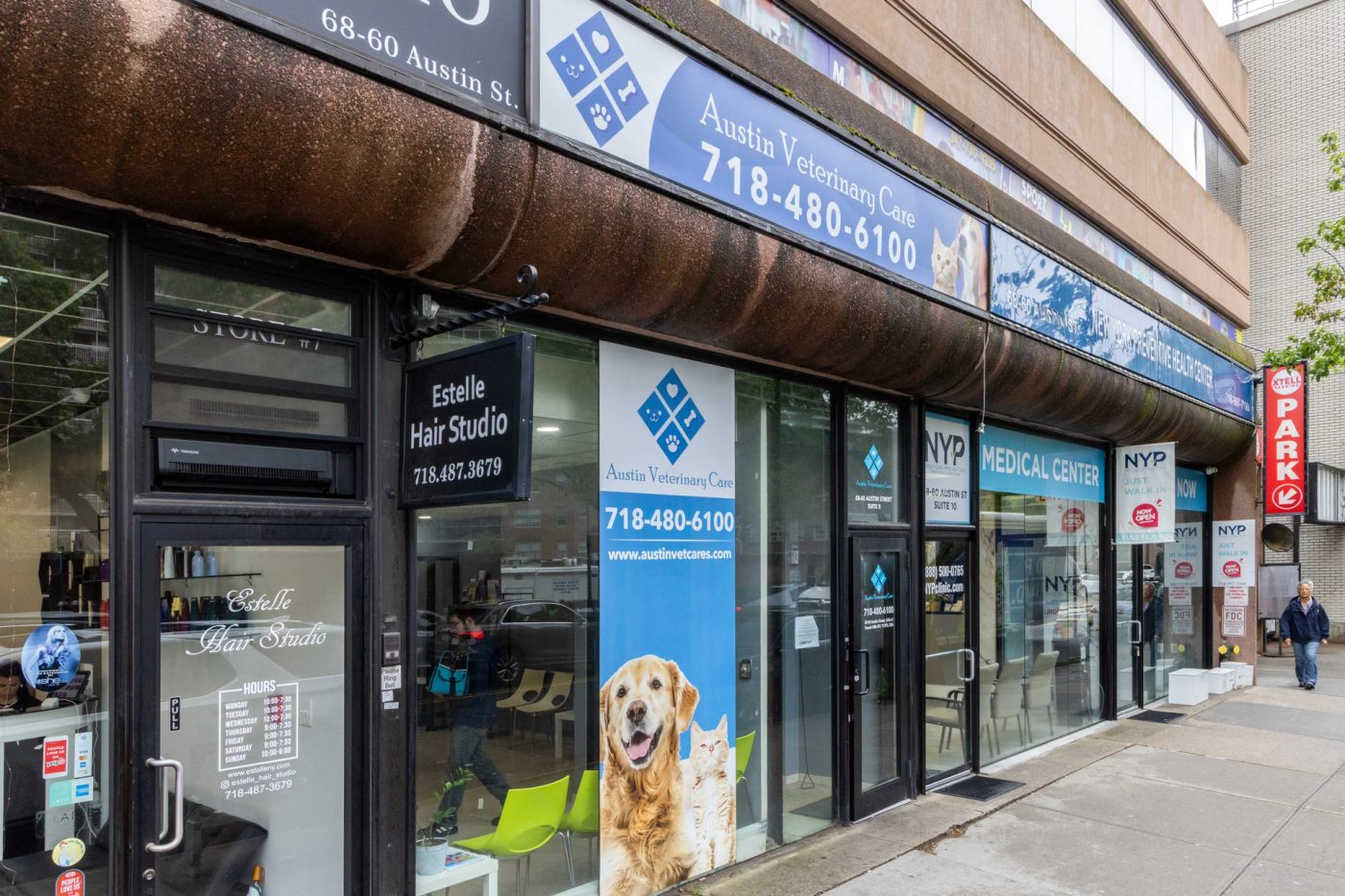
Start at Kew Gardens–Union Turnpike station and head to Austin Veterinary Care at 68-60 Austin St Store #8, Forest Hills, NY 11375.
Home care and lifestyle changes to help your dog live longer
Caring for a dog with IVDD at home can extend their life and improve their comfort. Follow these steps to support your dog's recovery and long-term health.
- Strict rest and confinement — Limit your dog's activity to short, leash-controlled bathroom breaks only, and keep them in a small, padded area to prevent jumping or running.
- Use mobility aids — A harness or sling can support your dog's hind end during walks, and ramps can help them access furniture safely.
- Maintain a healthy weight — Extra pounds put added stress on the spine, so work with your vet to keep your dog lean.
- Provide a supportive environment — Use non-slip flooring, keep food and water bowls elevated, and avoid stairs where possible.
- Monitor for changes — Watch for signs of pain or worsening symptoms, and contact your vet immediately if you notice any regression.
Quality of life and knowing when it's time to say goodbye
A good fit if…
- Your dog still enjoys food, attention, and gentle interactions.
- Pain is controlled with medication.
- They can move around with assistance and without distress.
Consider another option if…
- Deep pain perception is lost and surgery isn't an option.
- Your dog is in constant pain that medication can't manage.
- They've stopped eating, drinking, or responding to you.
This is a deeply personal decision. Talk with your vet about your dog's specific condition and use a quality-of-life scale to guide you. For more help, see our guide on poor quality of life and free quality of life calculator.
Breed predisposition: which dogs are most affected by IVDD?
Certain breeds are genetically predisposed to IVDD, especially those with long backs and short legs. Knowing your dog's risk helps you catch signs early.
| Breed | Why at risk | What to watch for |
|---|---|---|
| Dachshund | Long spine, chondrodystrophic | Back pain, reluctance to jump |
| Shih Tzu | Short legs, disc degeneration | Stiffness, crying when picked up |
| Corgi | Long back, heavy chest | Weakness in hind legs |
| French Bulldog | Chondrodystrophic, active | Sudden paralysis |
While breed matters, it doesn't determine lifespan—many predisposed dogs live full lives with good care.
IVDD treatment at Austin Veterinary Care in Forest Hills
If your dog shows IVDD signs, early intervention is key. Our team at Austin Veterinary Care in Forest Hills can help.
- Call us—Dial (718) 480-6100 to describe your dog's symptoms and schedule an exam.
- Visit our clinic—We're at 68-60 Austin St Store #8, Forest Hills, NY 11375, open Mon 9 AM–6 PM, Tue/Thu 10 AM–7 PM, Fri 9 AM–6 PM (closed weekends).
- Get a diagnosis—We'll assess neurological grade and recommend treatment, from conservative care to surgical referral.
- Start treatment—We offer same-day urgent care during business hours and in-house diagnostics for fast answers.
New clients get a free first exam (terms apply). We accept major credit cards, cash, and CareCredit. If you're in Rego Park, Kew Gardens, or nearby, we're easy to reach. For more on our services, see our Forest Hills vet clinic.
Sources
Also asked as
- Can a dog live a normal life with IVDD?
- How long can a dog live with IVDD without surgery?
- Does IVDD shorten a dog's lifespan?
Frequently asked questions
What is the final stage of IVDD?
The final stage is grade 5, where the dog is paralyzed and has lost deep pain perception. This is a medical emergency; immediate surgery offers the only chance for recovery, but the prognosis is guarded.
When to put down a dog with IVDD?
Consider euthanasia when your dog is in constant pain that medication can't control, has lost deep pain perception and surgery isn't an option, or has stopped eating and interacting. A quality-of-life scale can help you decide with your vet.
Can dogs pass away from IVDD?
IVDD itself doesn't usually cause death, but complications like urinary infections, pressure sores, or respiratory issues in severe paralysis can be fatal if untreated. With proper care, most dogs don't die from IVDD.
Do dogs fully recover from IVDD?
Many dogs recover fully, especially with early treatment. Grade 1–2 dogs often return to normal with conservative care; grade 3–4 dogs may regain walking after surgery. Grade 5 recovery is possible but less certain.
What triggers IVDD in dogs?
IVDD is often triggered by a sudden jump, fall, or twisting motion, but it can also occur spontaneously as discs degenerate. Breeds like Dachshunds are prone due to their long spines.